Virgins is a saint of the Catholic Church.
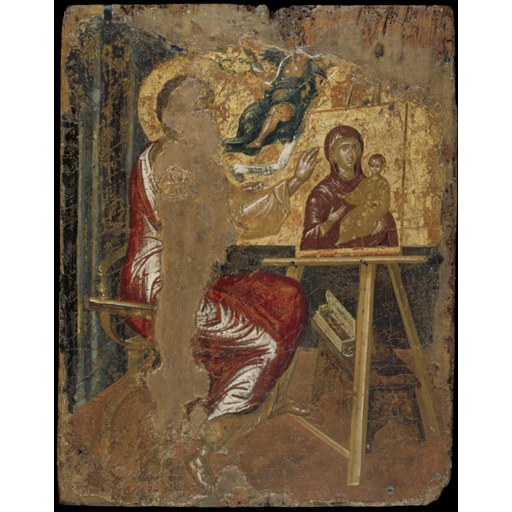
https://www.italianrenaissanceresources.com/units/unit-1/essays/saint-luke-paints-the-virgin-and-child-genealogy-of-an-image/
License: unknown
Virgins
Saint- Church
- Catholic
Roles & Family
Biography
The designation “Virgins” does not correspond to a single historical individual whose birth, death, family, or burial can be verified from reliable sources. In Christian hagiography and liturgy it is a category of sanctity, applied especially to women commemorated as having remained unmarried and as having dedicated their lives wholly to God. That class includes both virgin martyrs of the early centuries and later consecrated virgins and nuns. Because the subject is a type rather than a person, no year of birth, place of origin, or individual biography can be assigned without inventing facts.
From the second through the fourth centuries, particularly within the Roman Empire, a number of women were remembered as virgin martyrs. Their legends, often written or expanded long after the events they claim to describe, typically present them as young women who refused marriage or the demands of pagan officials, thereby preserving both Christian faith and virginity, and who were executed. Among the most widely known names are Agnes of Rome, Agatha of Sicily, Lucy of Syracuse, and Cecilia of Rome. Their cults are attested in late antique martyrologies, church dedications, and the Roman Canon of the Mass, which names several virgins; the precise historical details of their lives remain uncertain and are frequently legendary. Similar commemorations appear in other regions of the early Church.
In the Middle Ages the category was enlarged by group legends. The most famous is that of Saint Ursula and her companions, the so-called Eleven Thousand Virgins of Cologne. The story, which reached a developed form in the twelfth and thirteenth centuries and was popularized by collections such as the Golden Legend, associated a British princess and a host of attendant virgins with martyrdom at Cologne; a major relic cult grew around it, though modern historians treat the numbers and narrative as legendary rather than documentary. Other regional groups of virgin martyrs were likewise honored. Latin liturgical books provided a Common of Virgins, with Masses and Offices that could be used for any saint of this class whose individual feast was not otherwise specified.
Consecrated virginity as a stable way of life, distinct from martyrdom, is already visible in the third and fourth centuries in patristic writings and in the institution of virgins living in their families or in early communities. Later monastic rules for women presupposed virginity or widowhood. In the contemporary Catholic Church the Order of Virgins, restored after the Second Vatican Council, continues the ancient practice of women consecrated to virginity while remaining in the world. Patronages attached to individual virgin saints are many and varied, but there is no single, historically documented patronage belonging to “Virgins” as a collective title. Any biographical schema for this subject must therefore leave the personal fields empty; what can be described is a long liturgical and legendary tradition, not one recoverable life.