Wala of Corbie is a saint of the Catholic Church (d. 836). Wala of Corbie's feast day is celebrated on 31 August.
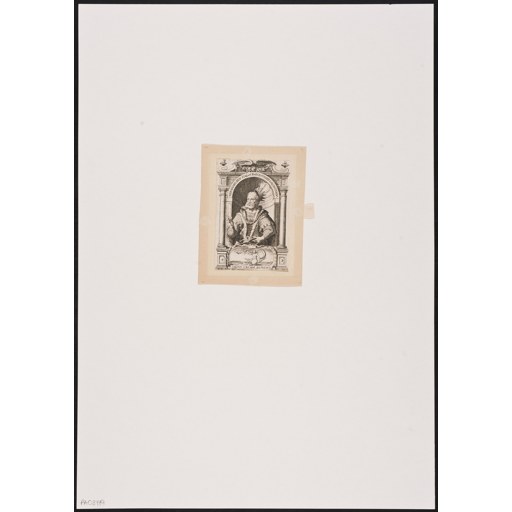
Bernardo d'Italia, King of Italy (799-818) (depicted)
License: Public domain
Wala of Corbie
Saint- Life Span
- d. 836
- Feast Day
- 31 August
- Gender
- male
- Church
- Catholic
Places
Roles & Family
Religious Information
Biography
Wala of Corbie was a Frankish nobleman of the wider Carolingian kin who became a Benedictine monk and abbot and who ranked among the most influential political figures of the late eighth and early ninth centuries. He was a son of Bernard, an illegitimate son of Charles Martel, and was therefore a first cousin of the emperor Charlemagne. His siblings included Adalard (Adalhard), later abbot of Corbie, as well as Gundrada and Bernarius. Raised at the Carolingian court, he received the literary, religious, and military formation customary for a high aristocrat. For most of Charlemagne’s reign he remained in secular life as a count and missus, taking part in the emperor’s wars and diplomacy, including business connected with Saxony and Italy. He is commonly listed among the leading men associated with Charlemagne’s later years and with the testamentary arrangements of 811. Like other lay magnates of his rank he married; the name of his wife is not preserved in the sources that survive.
After Charlemagne’s death in 814, the new emperor Louis the Pious at first pushed several of his father’s cousins from court. Wala entered the monastery of Corbie in Picardy, where Adalard had long been a monk and abbot. In the years that followed, the brothers were restored to influence. Wala became a leading counsellor, first of Louis and then of Louis’s eldest son Lothair. When Adalard died in 826, Wala succeeded him as abbot of Corbie and of its Saxon daughter-house Corvey, established on the Weser in the previous decade with monks from Corbie. As abbot he promoted Benedictine observance in the spirit of the reforms associated with Benedict of Aniane, while remaining deeply engaged in the politics of the empire.
Wala emerged as a principal opponent of the court faction around Louis’s second wife, Judith of Bavaria, and of the endowment of their young son Charles (later Charles the Bald) at the expense of the emperor’s elder sons. He supported Lothair and took a leading part in the aristocratic revolts of 830 and 833 that temporarily deprived Louis of power. After Louis recovered his throne, Wala was deprived of his Frankish abbacies and driven into exile. He accompanied Lothair into Italy and, in the mid-830s, was made abbot of Bobbio, the old Columbanian house in the Apennines which by then followed Benedictine practice. He died at Bobbio on 31 August 836 and was buried at the abbey.
Wala’s career is unusually well documented for a ninth-century aristocrat because Paschasius Radbertus of Corbie, who had known him, composed a lengthy memorial, the Epitaphium Arsenii (also called the Life of Wala). Written as a dialogue in which Wala appears under the name Arsenius, it is a major narrative source for the crises of Louis the Pious’s reign and for Wala’s reputation as a stern moralist and defender of ecclesiastical rights. He has been venerated as a saint in Benedictine communities, especially at Corbie, Corvey, and Bobbio, with a feast on 31 August. The cult remained monastic and local; there is no record of a later papal canonization in the modern sense.