Witta of Büraburg is a saint of the Catholic Church (d. 747).
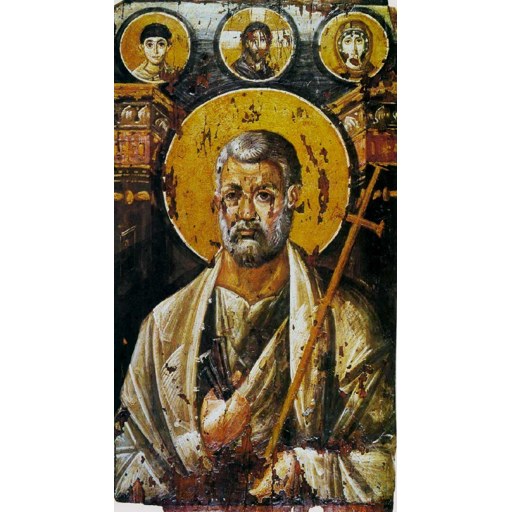
https://en.wikipedia.org/wiki/Icon
License: unknown
Witta of Büraburg
Saint- Life Span
- d. 747
- Gender
- male
- Church
- Catholic
Places
Roles & Family
Religious Information
Biography
Witta of Büraburg, also recorded as Wittan, Wintan, or under the Latin name Albinus, was an Anglo-Saxon missionary bishop of the eighth century and a disciple of Saint Boniface. His English name Witta (related to Old English hwīt, white) corresponds in sense to Albinus, the name by which he appears in some Latin documents. He came from England, as did the other leading members of Boniface’s mission to the German lands, but no reliable source preserves his place or date of birth, his family, or the circumstances of his early education and monastic profession. Like other companions of Boniface he is associated with the Benedictine tradition that shaped the Anglo-Saxon mission. He belongs to the generation of English clergy who, in the second quarter of the eighth century, worked under Frankish protection to organize dioceses, suppress remaining pagan practice, and impose Roman and conciliar discipline on the churches of Hesse, Thuringia, and Franconia.
In 741 Boniface, acting with the support of the Frankish mayors of the palace, established three new bishoprics in the interior of Germany: Würzburg, Erfurt, and Büraburg. Büraburg was a fortified hill site above the river Eder, near Fritzlar in northern Hesse, and had already served as a military and missionary centre after Boniface’s work in the region, including the well-known destruction of the Donar Oak and the foundation of the monastery at Fritzlar. Boniface consecrated Witta as the first bishop of Büraburg in that year, thereby placing an English-trained prelate over a frontier see intended to serve the Hessian population. In correspondence with Pope Zachary, Boniface reported these appointments; the pope confirmed the new arrangements in the early 740s. Witta’s diocese was small and experimental, one of several attempts to give the mission a stable episcopal structure before the later consolidation of the region under Mainz.
Witta is attested in the reforming councils that Boniface and the Carolingian mayors promoted in Austrasia and Neustria. He took part in the Concilium Germanicum of 21 April 742, which legislated on clerical discipline, monastic life, the prohibition of pagan rites, and the organization of the Frankish church. He is also named among the bishops who subscribed to the acts of the Council of Les Estinnes (Liftinas) in 743 and the Council of Soissons in 744. These subscriptions show that the bishop of Büraburg was recognized within the episcopal college of the Frankish realms and that he supported Boniface’s programme of aligning the German mission with Roman practice and with the Rule associated with Benedictine monasticism. Beyond the conciliar lists and Boniface’s letters, contemporary narrative sources say almost nothing about Witta’s day-to-day pastoral work, his preaching, or his relations with local Frankish elites. Later tradition remembers him simply as Boniface’s co-worker in Hesse.
Witta died in 747. No successor was appointed to Büraburg, and the short-lived diocese was allowed to lapse. Its territory was in due course absorbed into the church of Mainz, which Boniface’s disciple Lullus later ruled as bishop and then archbishop. The fortress and church at Büraburg remained of local importance, but the experiment of a separate Hessian bishopric ended with Witta’s death. Because the evidence for his life is limited to a handful of eighth-century documents, many personal details cannot be verified: the exact place of his death and burial, any cult that may have grown up around his tomb, and whether he was formally commemorated as a saint in a stable liturgical feast. He is sometimes counted among the holy men of the Anglo-Saxon mission to Germany, yet no universally observed feast day, patronage, or act of papal canonization is securely documented in the principal martyrologies and pontifical records.