Xenophon of Robika is a venerable of the Catholic Church (d. 1612). Xenophon of Robika's feast day is celebrated on 28 June.
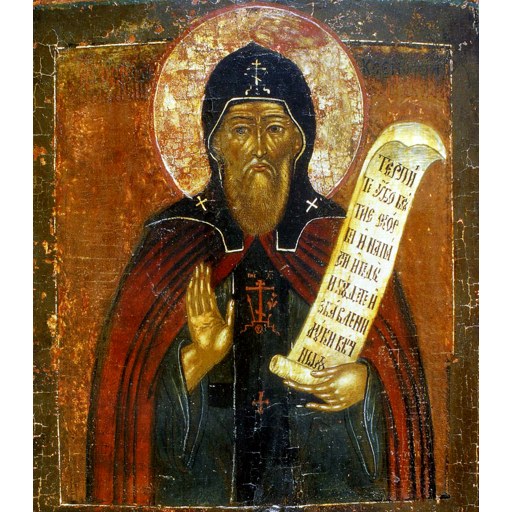
Unknown authorUnknown author
License: Public domain
Xenophon of Robika
Venerable- Life Span
- d. 1612
- Feast Day
- 28 June
- Gender
- male
- Church
- Catholic
Places
Roles & Family
Biography
Xenophon of Robeika (also spelled Robika; Russian: Ksenofont Robeisky) was a Russian Orthodox monk commemorated as a venerable (prepodobny) in the calendars of the Russian Church. Surviving notices place him in the spiritual orbit of Saint Alexander of Svir, the monastic founder who died in 1533 at the monastery he had established in the forests of the Svir country in the northern Novgorod lands. Church tradition calls Xenophon a disciple of Alexander. After a period of formation in that community he withdrew westward to the Robeika River, a small waterway about fifteen versts from Novgorod, and settled there as a hermit. The hermitage developed into a modest monastery dedicated to the Holy Trinity, later known as the Trinity-Robeika Monastery.
His life belongs to the northern Russian pattern of the forest pustyn: a small brotherhood gathered around an elder who had received training from a well-known spiritual father, supporting itself by labor and liturgical prayer rather than by great landed wealth. No contemporary charter, colophon, or extended Life of Xenophon is known. Almost everything recorded about him comes from later menologia, local Novgorod commemoration, and brief liturgical entries. Those sources do not give a birth year, family origin, or secular career, and they do not describe him as a bishop or public official. He is consistently classed as a monk-founder, not as a hierarch.
Russian Orthodox calendars give 1612 as the year of his death at the Robeika monastery. That date falls during the Time of Troubles, when the Novgorod region endured famine, political collapse, and foreign occupation, but no surviving narrative ties his death to a particular siege or act of violence. He was buried at the Holy Trinity monastery he had founded. The house remained a minor establishment. Like many small northern monasteries it later declined and was closed; it did not become a major pilgrimage shrine, and no large printed cycle of posthumous miracles attached to his name in the way that grew up around more famous Russian saints.
Veneration of Xenophon stayed essentially local, linked to Novgorod and to the disciples of Alexander of Svir. The Russian Orthodox Church keeps his memory on 28 June in the Julian calendar (11 July Gregorian). He is sometimes listed among the saints of the Novgorod land. There is no evidence that he married, held the office of patriarch or pope, or passed through a Roman-style beatification. Later popular summaries occasionally confuse him with other saints named Xenophon, especially the fifth-century Xenophon of Constantinople whose feast is 26 January; the Robeika monk is a distinct figure of the Russian North. Precise facts about his early life, the exact year the monastery was founded, and the later fate of his relics are not securely attested.