Zachary is a saint of the Catholic Church (d. 752). Zachary's feast day is celebrated on 15 March.
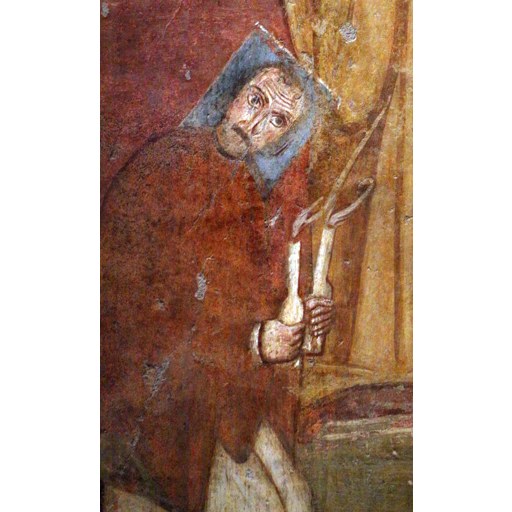
Sailko
License: CC BY 3.0
Zachary
Saint- Life Span
- d. 752
- Feast Day
- 15 March
- Gender
- male
- Church
- Catholic
Places
Relics & Where to Venerate
Location unknown
The bodily remains of Zachary are a first-class relic. Venerated at St. Peter's Basilica.
Roles & Family
Biography
Pope Zachary (Latin Zacharias), a Greek by family origin, was born in Calabria in the Byzantine south of Italy; later tradition specifies Santa Severina. The Liber Pontificalis names his father as Polychronius. His exact year of birth is not recorded in contemporary sources. He served as a deacon of the Roman Church and was elected bishop of Rome in late 741, succeeding Gregory III, at a moment when Lombard pressure on the Duchy of Rome was intense and imperial protection from Constantinople had become unreliable. He is commonly described as the last pope of Greek origin in the sequence of seventh- and eighth-century pontiffs drawn from the Byzantine cultural world of Italy.
Zachary’s pontificate is especially remembered for diplomacy rather than military confrontation. He travelled in person to treat with the Lombard king Liutprand, obtaining the restoration of four cities previously taken from Roman territory and securing further restitutions of church lands. After Liutprand’s death he dealt with King Ratchis, whose later abdication and entry into monastic life belong to the same unsettled Lombard succession. These negotiations helped stabilize papal holdings in central Italy without a Frankish army yet being present on the peninsula. In Rome he restored and decorated churches; work associated with Santa Maria Antiqua and improvements to the Lateran complex are linked to his reign. He also translated the Dialogues of Gregory the Great into Greek, a literary act that carried Western monastic and hagiographical tradition into the Greek-speaking world.
Relations with the Franks and with Saint Boniface shaped the longer political future of the papacy. Zachary confirmed Boniface’s organization of the church in the German lands, granted pallia, and corresponded on discipline and doctrine. When Pepin, mayor of the palace, raised the question whether the Frankish kingship should remain with a Merovingian who no longer exercised real power, Zachary’s reply—as reported in Frankish sources—supported the principle that royal authority belonged to him who actually governed. That opinion helped legitimize Pepin’s assumption of the crown in 751 and bound the Roman see more closely to the rising Carolingian house, a shift whose full military consequences (the later donation of Pepin and the campaigns of Stephen II) fell just after Zachary’s death. Historians continue to debate how far later Frankish narratives formalized or amplified the papal role, but the correspondence itself is a central eighth-century fact.
Zachary also acted on social and disciplinary matters. He opposed the sale of Christians as slaves to Muslim buyers, intervening against Venetian merchants engaged in that traffic and ransoming captives. He addressed irregular baptisms and other canonical cases, and he was drawn into a controversy, reported through Boniface, concerning a cleric named Virgil accused of teaching that there existed another world and other men beneath the earth; Zachary’s surviving remarks treat such a doctrine as theologically dangerous if it implied a second race of men outside the economy of salvation. Despite the iconoclastic policy of Emperor Constantine V, his dealings with Constantinople were comparatively measured. He died in Rome in March 752 and was buried in St. Peter’s. After a deacon named Stephen died before consecration, Stephen II succeeded him. Zachary is venerated as a saint in the Catholic Church; his traditional feast is 15 March.