Zephyrinus is a saint of the Catholic Church (d. 217). Zephyrinus's feast day is celebrated on 20 December.
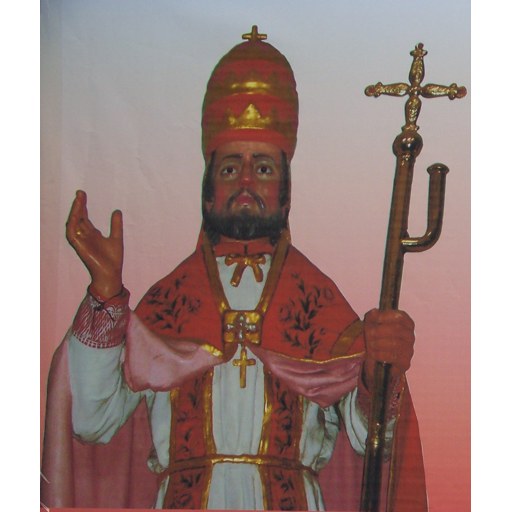
Andreach90
License: Public domain
Zephyrinus
Saint- Life Span
- d. 217
- Feast Day
- 20 December
- Gender
- male
- Church
- Catholic
Places
Roles & Family
Biography
Pope Zephyrinus was Bishop of Rome from about 199 until his death in 217, succeeding Victor I and preceding Callixtus I. Almost nothing can be established about his early life from contemporary evidence. The Liber Pontificalis, a later compilation of uneven reliability for the third century, describes him as a Roman by birth and the son of a man named Habundius (or Abundius). No ancient source records a year of birth, and modern historians treat most personal details of the earliest bishops of Rome as uncertain. His pontificate fell under the Severan emperors, a period in which Christianity remained illegal but imperial enforcement was often intermittent. The principal near-contemporary witnesses are hostile or indirect: Hippolytus of Rome, who opposed Zephyrinus, and later Eusebius of Caesarea, who sketches the succession and some controversies without a full biography.
The Roman church in these years was strained by disputes over the Godhead and over penitential discipline. Teachers associated with modalism or Sabellianism (sometimes called Patripassianism) spoke of Father and Son as successive modes of one person rather than as distinct. Hippolytus, in the work known as the Refutation of All Heresies, portrayed Zephyrinus as poorly educated in theology and as dominated by his deacon Callixtus. He reports that the pope used cautious formulas such as affirming one God, Christ Jesus, and denying that the Father died, language Hippolytus judged too weak against monarchian error. Whether Zephyrinus was himself a modalist, merely inarticulate, or trying to hold a divided community together cannot be settled from the surviving, partisan evidence. Callixtus, who administered the church cemetery on the Via Appia later known as the Catacomb of Callixtus, was also accused by Hippolytus of relaxing the older, stricter rules that excluded the gravely lapsed from communion. Those charges belong to an internal Roman conflict that continued into the next pontificate.
Institutionally the Roman community was becoming more organized. Clerical roles, charitable funds, and burial places were more clearly administered than in the second century. A persecution associated with Septimius Severus around the early third century affected Christians in parts of the empire; its precise impact in Rome during Zephyrinus’s years is not well documented. Quartodeciman practice and other lingering disputes from Victor’s time still required attention. Eusebius places Zephyrinus in the succession lists and notes the length of his tenure, which later catalogues fix at roughly eighteen years. No genuine papal letters from him survive, and later collections that attach decrees or martyr stories to his name are not accepted as authentic third-century documents.
Zephyrinus died in 217, according to the usual reconstruction of the early papal chronology, and tradition assigns the date 20 December. The Liber Pontificalis states that he was buried in a cemetery of his own beside the cemetery of Callixtus on the Via Appia. Callixtus succeeded him. Later martyrologies honoured Zephyrinus as a saint and, in some strands of tradition, as a martyr; the Roman Martyrology commemorates him on 20 December (an older feast on 26 August was dropped). There is no contemporary proof that he died by violence, and historians generally do not treat him as a martyr in the strict sense. He remains a somewhat obscure transitional figure: a bishop of Rome whose reign is known mainly through the controversies that surrounded Callixtus and Hippolytus, and through the slow consolidation of the Roman church’s structures in the early third century.