Zinobi is a saint of the Catholic Church. Zinobi's feast day is celebrated on 30 October.
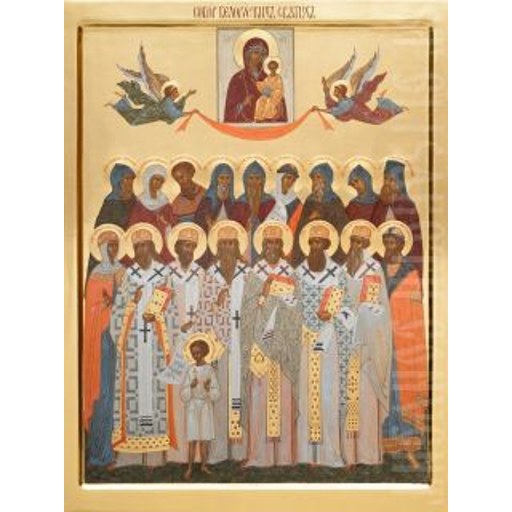
https://catalog.obitel-minsk.com/icons-prav/painted-icons.html
License: unknown
Zinobi
Saint- Feast Day
- 30 October
- Gender
- male
- Church
- Catholic
Places
Relics & Where to Venerate
Location unknown
The bodily remains of Zinobi are a first-class relic. Venerated at Alexander Nevsky Church, Tbilisi.
Roles & Family
Biography
Zinobi, known in Greek as Zenobius, was a Christian physician and martyr commemorated in the Eastern churches together with his sister Zinobia (Zenobia). Hagiographical tradition places his origin in the city of Aegae (also rendered Aegeae or Aigai) in the Roman province of Cilicia, on the southeastern coast of Asia Minor. In that urban setting of the later third century he trained and practiced as a physician. Accounts emphasize that he treated the sick without fee and attributed recoveries to Christ rather than to conventional pagan medicine or incantation, a combination of charity and open Christian profession that is said to have drawn converts.
The siblings are described as leading a shared life of piety. During an episode of imperial persecution of Christians, conventionally situated in the reigns of Diocletian and Maximian (late third or very early fourth century), local officials arrested them. The surviving narratives belong to the genre of martyr acts rather than to dated court records; they report that Zinobi and Zinobia refused to sacrifice to the gods. They were subjected to the tortures typical of that literature—beating, the rack, and related torments—yet remained constant and were finally beheaded. No source that can be independently dated supplies an exact year of death, and the event is simply assigned to the general era of the Great Persecution.
After the execution, fellow Christians are said to have buried the bodies, but no tomb or early cult site has been confirmed by archaeology. Veneration is attested in Eastern Orthodox synaxaria, where the feast is kept on 30 October, and in some Oriental Orthodox and Eastern Catholic calendars. Later Western martyrologies occasionally conflated this figure with other saints of the same name, especially the fifth-century bishop Zenobius of Florence; the Cilician physician-martyr is a distinct person. Zinobi is not recorded as a bishop, patriarch, or member of a formal religious order.
No contemporary non-hagiographical evidence—inscriptions, papyri, or pagan historians—mentions Zinobi, a silence common for many local martyrs of the period. While the existence of Christian physicians and of sibling confessors in Cilicia is historically plausible, the specific biographical details remain confined to ecclesiastical tradition. The story has been used in Orthodox preaching as an example of unmercenary medical charity joined to confession of faith, but claims of later relic translations or of formally defined patronages lack early documentary support.