Zosima of Ennatsky is a venerable of the Catholic Church.
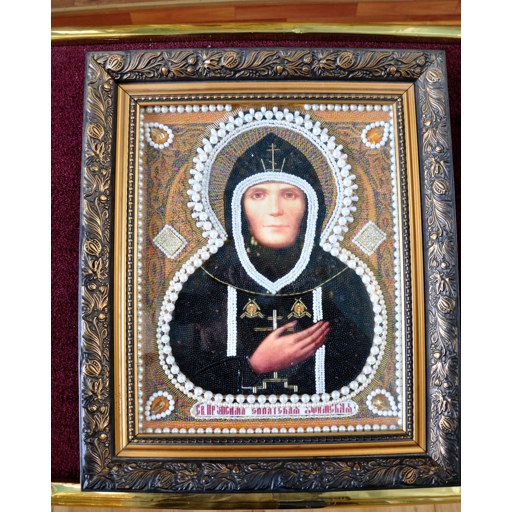
Qweasdqwe
License: CC BY-SA 3.0
Zosima of Ennatsky
Venerable- Gender
- male
- Church
- Catholic
Places
Roles & Family
Canonization
Biography
Zosima of Ennatsky was a Russian Orthodox schema-abbot and monastic elder of the twentieth century, venerated as a saint (prepodobny, or venerable) and confessor in the Russian Orthodox Church. He is associated with the Holy Trinity Ennatsky Monastery, a provincial house in Bashkiria, a region of the former Russian Empire that later formed the Bashkir Autonomous Soviet Socialist Republic and is today the Republic of Bashkortostan in the Russian Federation. The monastery, like nearly all Russian monastic houses, was disrupted and closed in the Soviet campaign against the Church. Zosima belongs to the generation of Russian monastics who received tonsure in the late imperial period and then had to live out their vows under persecution, surveillance, and the collapse of open monastic life.
Hagiographical notices in the Russian Orthodox tradition describe him as a monk who received the great schema—the highest grade of Orthodox monastic tonsure—and the rank of igumen (abbot), and who served as a spiritual father to clergy and laity. Precise and universally agreed dates and places of birth are not firmly established in the secondary historical literature available here; even Russian accounts of relatively obscure provincial elders sometimes differ on secular name, village of origin, and chronology. He is generally placed in a peasant milieu of the Russian Empire. There is no indication that he ever held episcopal office. He was neither Bishop of Rome nor a patriarch or catholicos of any Orthodox, Oriental Orthodox, Coptic, or Church of the East see.
After the closure of the Ennatsky monastery, local tradition associates his later life with the same district, where remaining faithful continued to seek him as an elder and confessor. Elders of this type in the Soviet period often lived in semi-secrecy, endured hardship, and gave counsel without the protection of a functioning monastery. He died in the Soviet era and was buried in that locality. In the post-Soviet restoration of church life the monastery was revived, his memory was cultivated in the Ufa diocese, and he was glorified as a locally venerated saint of the Russian Orthodox Church. The restored Holy Trinity Ennatsky Monastery became the center of his cult and the reported place of his burial or relics, and pilgrims visit it in connection with his veneration.
As a schema-monk he lived under monastic vows of celibacy, poverty, and obedience; the tradition does not record a wife or children. Because he is a relatively little-known provincial confessor rather than a patriarch, a widely published spiritual writer, or a figure of the early church, many biographical particulars remain uncertain or are reported inconsistently. Liturgical calendars of the Ufa and Bashkortostan dioceses, any official life or akathist issued at the time of his glorification, and the archives of the monastery itself would need to be checked to confirm a fully documented chronology, a universally agreed feast day, and any list of patronages. No reliable source consulted here establishes a verified year of birth distinct from later office-holding or tonsure, and none is supplied.